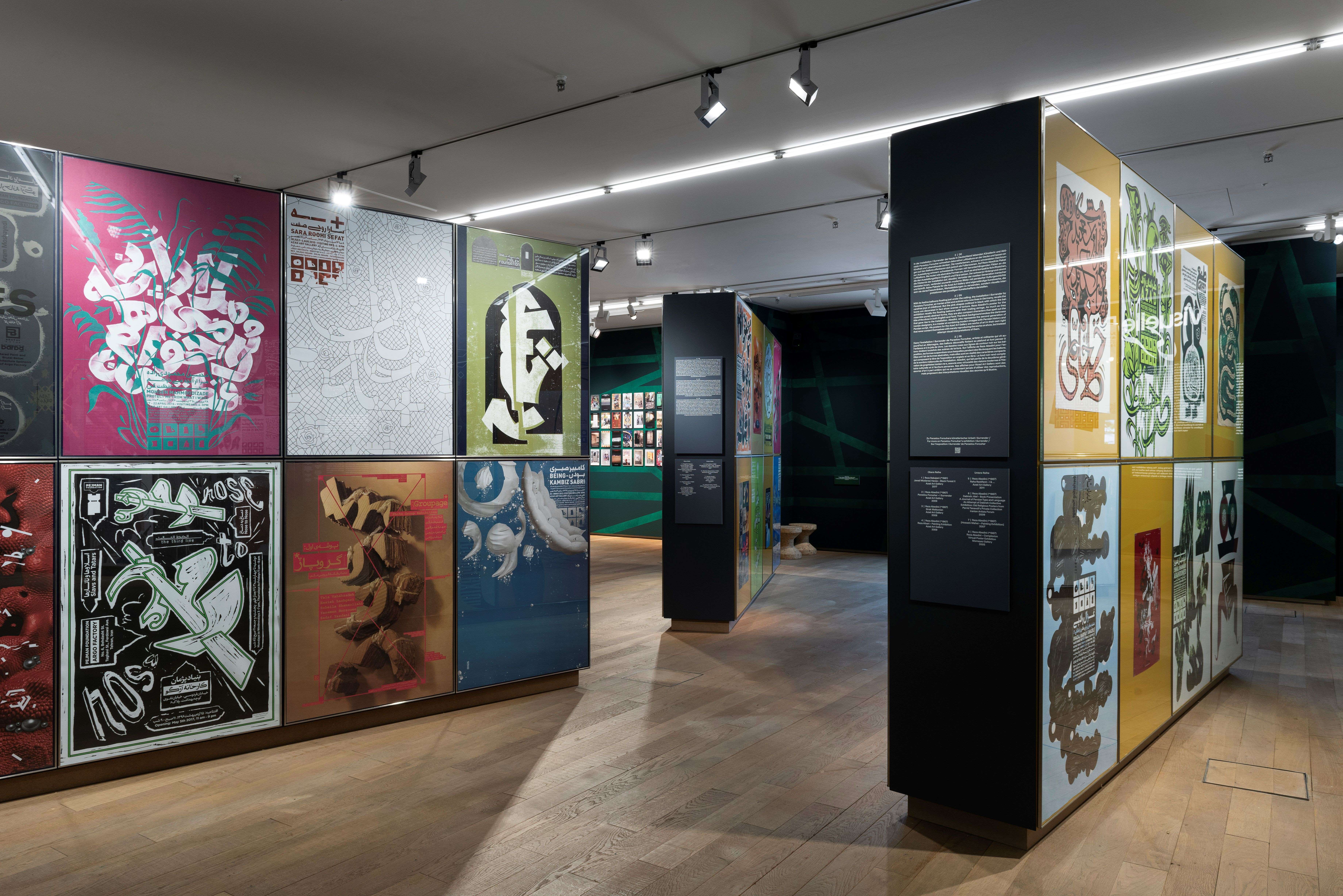
Iranian graphic design has a relatively young history. It developed as an independent discipline in the 1960s. After the founding of the Islamic Republic in 1979 and the Iran–Iraq War, designers reconnected with the pre-war period. Their work combines an unorthodox interpretation of Persian cultural heritage with contemporary tendencies in international graphic design. Drawing on its Europe-wide unique holdings of Iranian posters, the museum presents a new donation featuring works from the past 20 years. Some confirm stereotypical Western ideas of Islamic aesthetics, while others radically subvert them and challenge our gaze. The posters reflect creative freedom in times of political crisis; their often symbolically coded, poetic visual language breaks through the cultural and political restrictions imposed by the regime. Iran is currently experiencing a historic moment. The poster exhibition is accompanied by graphic contributions that reflect the current political situation and visualise the courageous resistance led by women against a deeply repressive regime. The exhibition section *Revolution of the Nameless* in the third niche reflects the most recent events in Iran and also presents disturbing images.