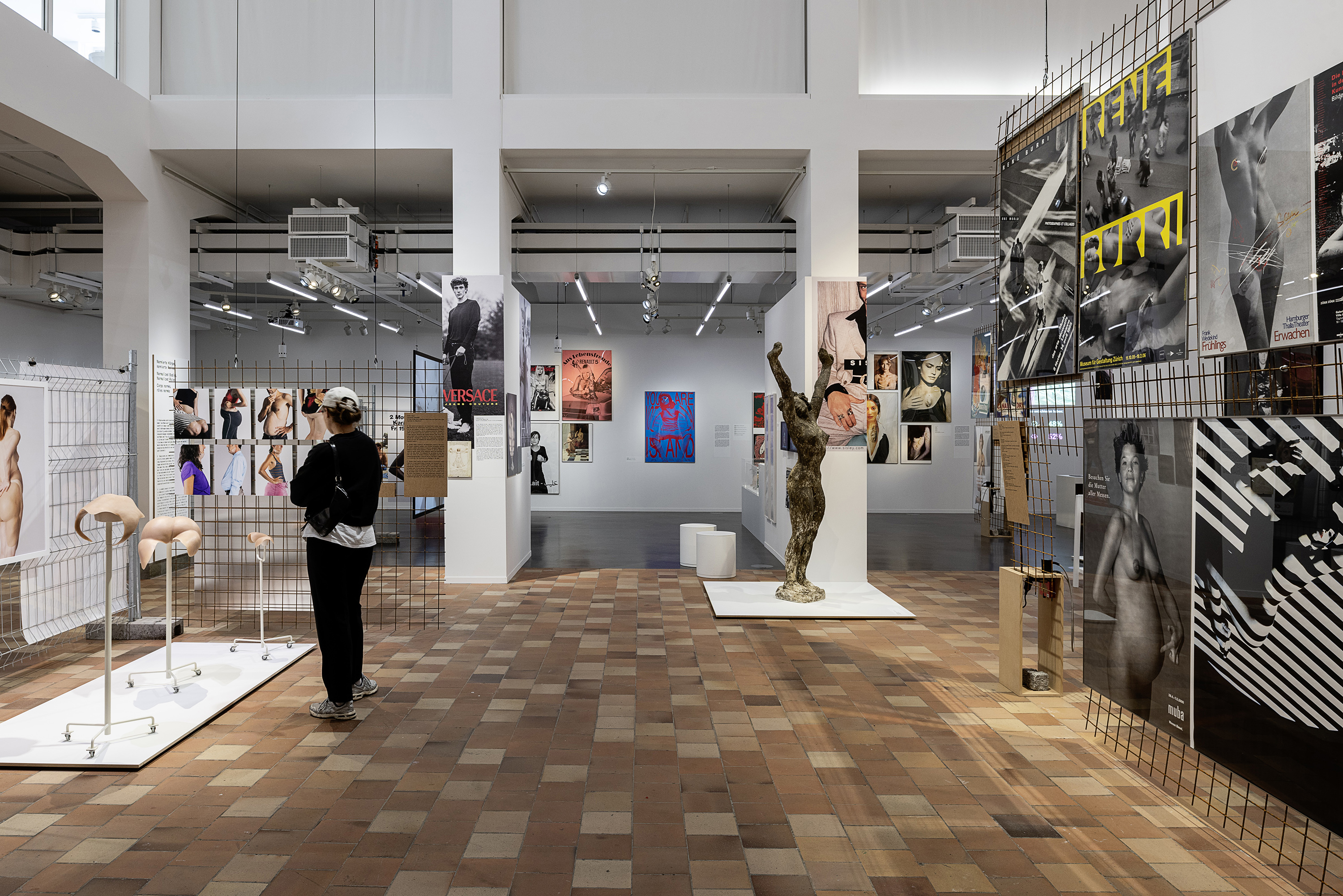
Images of bodies flood public and virtual space. Their visual codes follow the rules of the market: stereotypical ideal bodies assert themselves as expressions of a successful life. Non-binary, queer, ill, disabled, old, or Black bodies receive hardly any visibility. Representations of bodies thus always function as cultural signs as well and cement power relations. The poster, as a projection surface for everyday desires, proves particularly resistant to social change. In the exhibition Talking Bodies, posters enter into dialogue with commercials, objects of everyday culture, historical images, and contemporary artistic positions. Continuities and ruptures in the representation of the human body thus become especially visible.